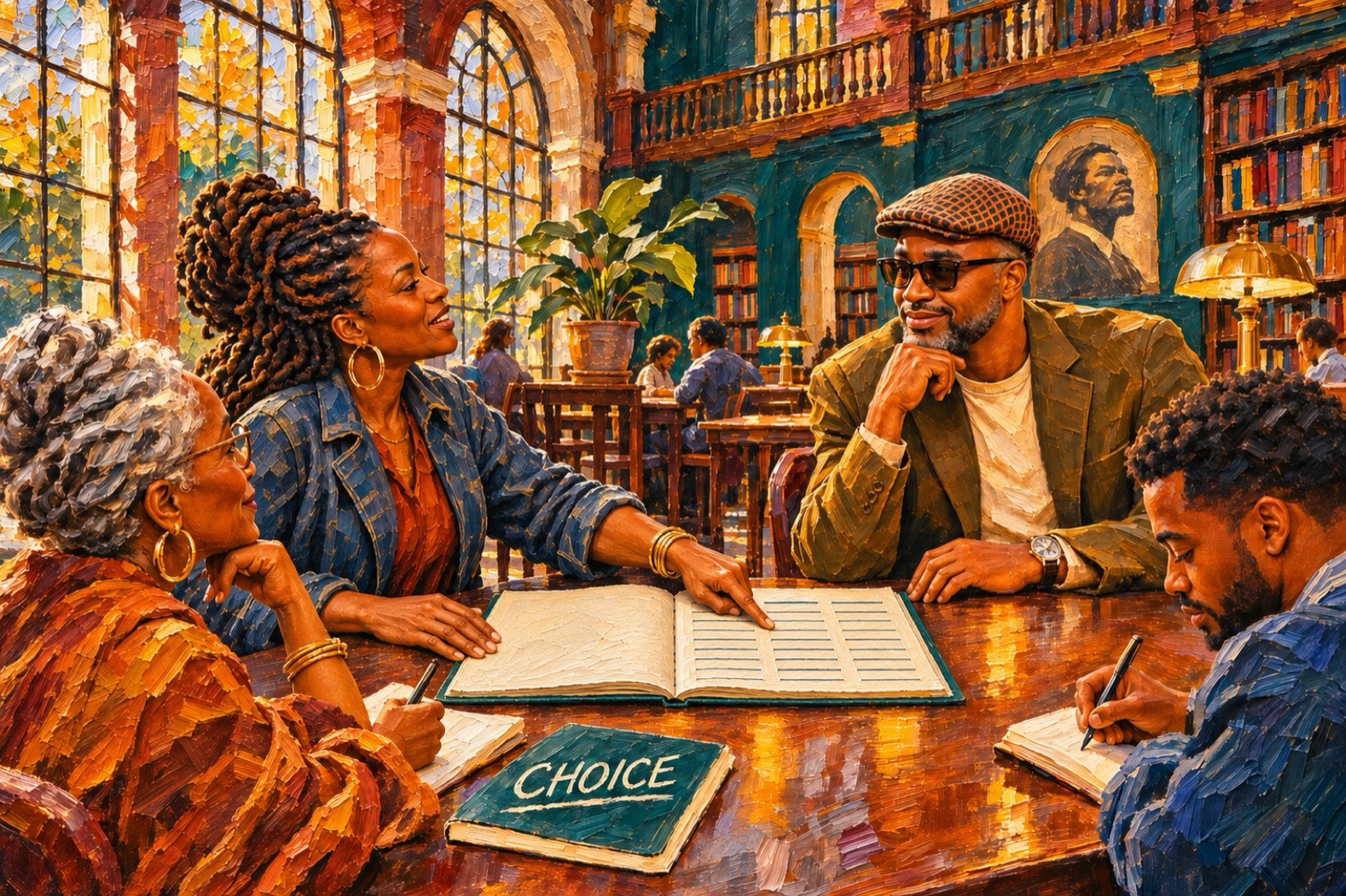
Small
Most decisions are ordinary.
When to make time for something that matters. Whether to take on a commitment. Which next step to try. They rarely feel historic, and they add up to a life.

A practical course in making decisions and taking action.
Think clearly. Choose with purpose. Take your next step.
Instant digital download · Yours to keep · Read on screen or print at home
Knowledge is meant to be passed on. CHOICE takes what gets learned the hard way — starting over, counting the cost, trying again — and puts it on the page as a method anyone can practise.
When to make time for something that matters. Whether to take on a commitment. Which next step to try. They rarely feel historic, and they add up to a life.
“I sold my house in Georgia, moved to Portugal, and later made a home in Albania. Starting over means nothing is handed to you, and every option costs something. You choose anyway, one decision at a time.”
— The Portugueese Plug, from the CHOICE opening case
Start small. Something you could work on this week.
Stays on this page — nothing is sent. Watch it appear in the six steps below.Four steps before you act, two after you try. If new information changes the decision, go back to the step that needs another look.
State the decision, explain why it matters, and name something to protect. “Get my life together” gives you too many places to start. Ask what would look different on an ordinary day.
You will be able to state one want in a form you could notice.
I am deciding whether to make time to write this week because I miss creating. I want to protect my bedtime.
Give each its own line: a fact you could check, the explanation you give it, and the question still unanswered. Keep the facts and the story on separate lines.
You will be able to separate facts, explanations, and unknowns.
Fact: three lunches had meetings — calendar.
Explanation: “lunch never works.”
Unknown: which day could I try?
Compare two or three real possibilities using the same questions: benefit, cost, time, money, energy, unknowns, and boundaries. There may be a third option — the smaller step, the different route.
You will be able to compare two or three paths on the same questions.
A: fifteen minutes at lunch — a longer window.
B: five minutes before dinner — a smaller start.
What does each ask of me?
Plan a manageable attempt with a cue, an action, a limit, a backup, a prediction, and a review time. A good plan knows your limits. A prediction is a guess to check.
You will be able to write a plan you can put on a calendar.
After Tuesday lunch I will write for fifteen minutes, then stop. If lunch changes: five minutes before dinner. I expect a rough paragraph. Review that evening.
Put “I expected” beside “what happened.” Record the benefit, the cost, and whether your limit held. Four sentences are something to examine.
You will be able to record results against your prediction.
Expected: a rough paragraph.
Happened: four sentences in fifteen minutes.
Stopped at the limit. Bedtime protected.
Choose: continue, adjust, pause, ask for help, change direction, or find out more. Then name a next action and a review time. Revision belongs in the lesson.
You will be able to choose a dated next move and name the step to revisit.
Adjust: try five minutes before dinner on Thursday and review afterward. Credit to me for making the attempt.
Ready to work through a decision of your own? The full method, with every worksheet, is in the curriculum.
Eight pieces, made to be used together. The full pages are yours when you buy.
Covers shown for illustration. CHOICE is a digital course — everything arrives as PDFs you can read on screen or print at home.

Eight pieces on one line. Start at the top and work down: read the teaching pages, do the practice on the matching workbook page, write on paper or keep a private note. You can complete it offline.
Read this first. How the packet fits together and how to choose a low-stakes decision to carry through all six lessons.
The opening case, then six lessons — one per step. Each teaches the idea, works it on a real launch example, and ends with a quick quiz and a self-check.
Where the work happens: your question, your evidence, your options, your plan and your review. Includes a pre-check, an attempt log, a “when something gets in the way” routine, quiz answers and a certificate for after your review.
One page for putting options side by side on the same questions. Print it again for the next decision, and the one after that.
The six steps in your wallet, for the moment a decision shows up away from your desk.
One everyday decision taken through every step, start to finish, so you can see a completed loop before you write your own.
The course as a slide presentation, for learners who prefer to follow along on screen or work through it with a group.
“How did it go?” — a short form for your review, and a closing letter for when you have finished: you did it.
Every PDF also comes in a white, printer-friendly version. Groups: a facilitated seminar edition is available on request.
Lessons 1–4 on your own decision, then a plan review. On your own, allow 2 to 2.5 hours and go at your own pace; the live session runs 120 minutes.
Do your action one time and log it. Put the review date on your calendar and tell one person. If something gets in the way, there is a routine for that.
Use the actual attempt to Check and Evaluate, then plan your next loop. The certificate is for after your review.
Self-love runs through the whole method. Your wants, needs, energy and boundaries belong in the decision at each step. Give yourself the consideration you would offer a friend — and keep your answers private.

“Starting over means nothing is handed to you. You choose anyway, one decision at a time.”The Portugueese Plug · CHOICE, opening case
Work on your decision at a desk, in a café, or in a quiet moment in your day. The decision grid gives you a structure wherever you are.
Buy the curriculum, the book, or the album on their own — or take all three together and save.
A practical course in making decisions and taking action.
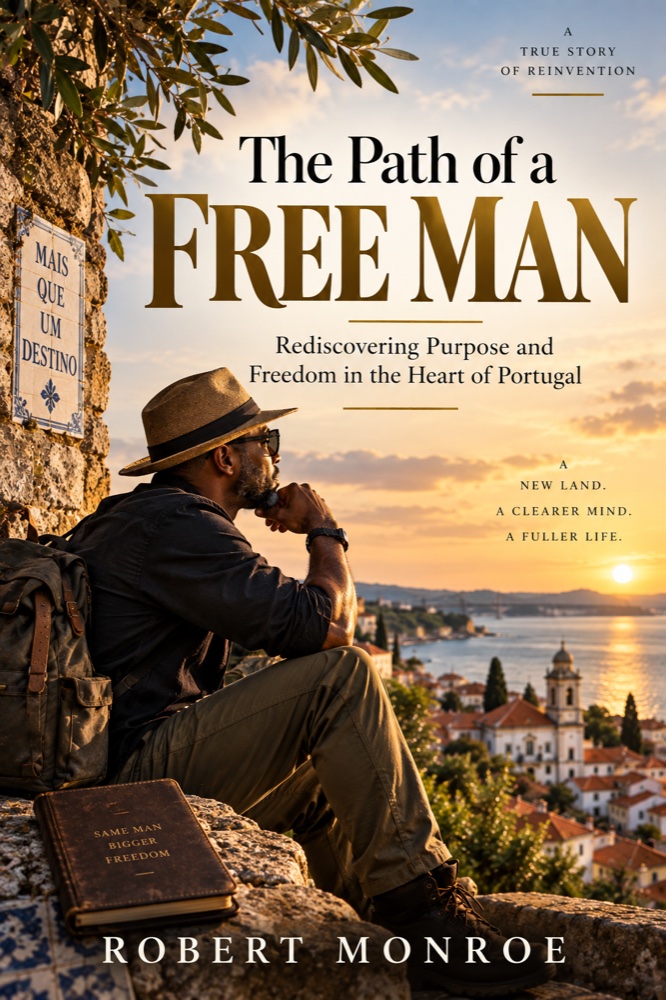
Rediscovering Purpose and Freedom in the Heart of Portugal.
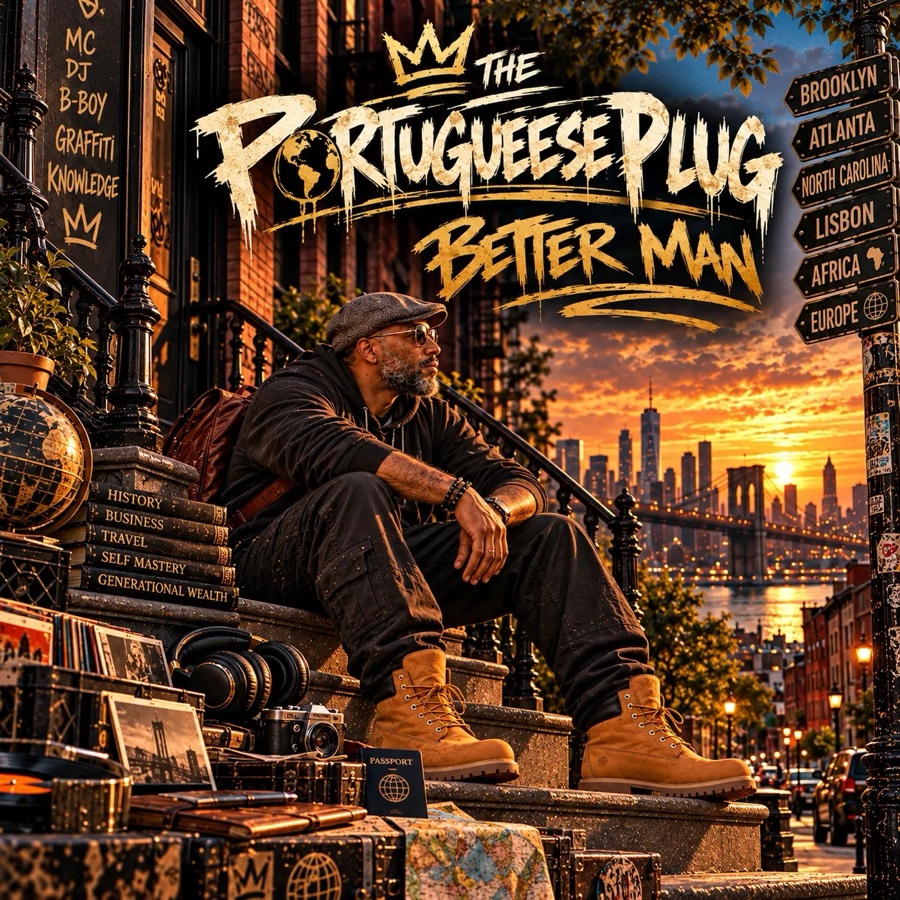
Made with the hip-hop he grew up on in Brooklyn. Two movements: Wake Up and Become.
Read it. Hear it. Practise it.
CHOICE — lessons, workbook and decision grid.
The Path of a Free Man.
Better Man — 19 tracks.
Eight pieces as PDFs: a welcome letter, the six CHOICE lessons (16 pages), the 36-page workbook with a certificate, the reusable Everyday Decision Grid, a pocket card, a worked example, the workshop slide deck, and a feedback form with a closing letter. Each also comes in a white, printer-friendly version.
It is a digital download. After checkout on our Gumroad storefront you can download your files straight away, read them on screen, or print them at home.
Plan on 2 to 2.5 hours to work through the first four lessons and write your plan. Then try your action once over the next 3 to 7 days, and spend 20 to 30 minutes reviewing what happened. Go at your own pace.
An everyday one you can work on this week — making time for something that matters, whether to take on a commitment, or which next step to try. Start small; you can reuse the grid for bigger decisions later.
No. The curriculum stands on its own. The lessons use the launch of the book and album as their worked example, so the Complete Collection lets you read and hear the story behind it.
No. CHOICE is a planning method, not professional advice. For crisis, health, money, legal, or safety matters, please talk with a qualified person.
Yes. Write to theportugueeseplug@gmail.com about group orders and the facilitated seminar edition.
No. The Plug University is an education brand from The Portugueese Plug. The certificate in the workbook marks your own completed review; it is not an academic credential.
Write to us about group orders, the facilitated seminar edition, or anything you want to know before you buy.
theportugueeseplug@gmail.com Scan to visit the store